Source: National Pork Producers Council (NPPC) Weekly Capital Update
This week’s policy developments out of Washington carry meaningful implications for pork producers — from renewed momentum on a federal fix to Proposition 12, to expanded export access in Asia and South America, labor certainty for H-2A workers, and aggressive steps to prevent New World screwworm from entering the United States.
Here’s what matters most for the pork industry.
Farm Bill 2.0 Introduced — Prop 12 Fix Back in Focus
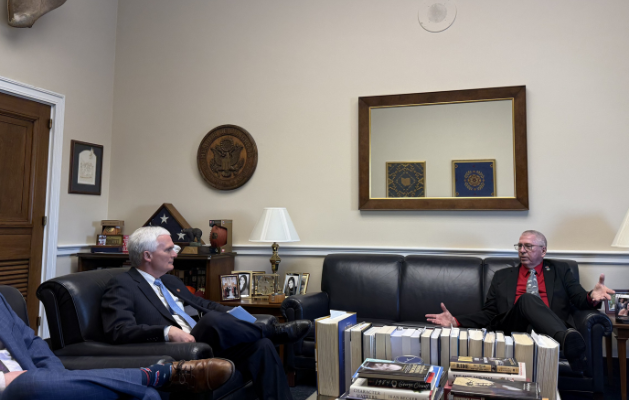
Just after NPPC President Duane Stateler met with Rep. Bob Latta and House leadership staff, House Agriculture Chairman Glenn GT Thompson introduced “Farm Bill 2.0.”
The proposal includes a federal solution to the patchwork of state laws triggered by California Proposition 12, which continues to reshape sow housing and pork marketing across the country.
Why It Matters
The five-year farm bill governs everything from conservation and nutrition programs to foreign animal disease preparedness and export promotion. For pork producers, a Prop 12 legislative fix remains one of the highest priorities to restore consistency in interstate commerce.
A markup is expected the week of February 23, with a House floor vote anticipated before Easter recess.
U.S.–Taiwan Trade Agreement Finalized
In what NPPC calls a major win for U.S. pork, the U.S. and Taiwan finalized a reciprocal trade agreement that:
-
Cuts pork tariffs by half
-
Aligns ractopamine MRLs with Codex standards
-
Removes restrictive import licensing procedures
-
Ends 100% batch inspection requirements
-
Accepts all USDA-listed U.S. plants without pre-export audits
-
Recognizes U.S. African swine fever protection zones
NPPC described the agreement as the result of more than 15 years of advocacy.
Swine Web Perspective
Taiwan is a high-value market. Reducing non-tariff barriers is often more impactful than tariff reductions alone. This move strengthens long-term export reliability — critical as global protein demand shifts and competition intensifies.
Argentina & Bangladesh Open Doors to U.S. Ag
Additional trade agreements were signed with Argentina and Bangladesh, improving access for U.S. agricultural products.
Highlights include:
-
Recognition of USDA FSIS oversight authority
-
Acceptance of U.S. export certificates (including digital forms)
-
Reduced regulatory hurdles
-
Bangladesh committing to $3.5 billion in U.S. agricultural purchases
Why It Matters
Export diversification remains essential. Trade agreements that reduce regulatory friction create stability in pricing and long-term demand — key pillars for producer profitability.
H-2A Workers Regain CDL Eligibility
The Federal Motor Carrier Safety Administration issued a final rule clarifying that H-2A visa holders can obtain commercial driver’s licenses (CDLs).
Many state agencies had stopped issuing CDLs after a prior interim rule created confusion.
Why This Is Significant
For pork producers relying on H-2A workers for manure hauling, pumping, and specialized equipment operation, this restores labor certainty.
In an industry where labor shortages remain persistent, clarity equals stability.
Push to Strengthen the Regulatory Flexibility Act
NPPC joined more than 70 ag and business groups urging Congress to pass the “Prove It Act of 2025” (H.R. 1163), aimed at strengthening the Regulatory Flexibility Act.
The goal: require federal agencies to fully assess the direct and indirect cost of regulations on small farms and businesses before implementation.
Industry Context
Compliance burdens often hit small and mid-sized producers hardest. Increased transparency around regulatory cost analysis could meaningfully affect future rulemaking.
USDA Moves Aggressively on New World Screwworm
USDA announced completion of a new sterile fly production facility at Moore Air Base in Texas to combat New World screwworm (NWS).
By 2027, the facility will produce up to 300 million sterile flies per week to suppress the pest if it enters the U.S.
NWS larvae feed on living tissue and pose severe animal welfare and economic risks. USDA estimates a potential $100 billion economic impact if the pest establishes itself in the U.S.
Swine Web Insight
Foreign animal disease and pest preparedness continues to be one of the most underappreciated pillars of U.S. protein security. Prevention investments now reduce catastrophic risk later.
Final Takeaway for Pork Producers
This week’s Capital Update reflects three consistent themes:
-
Market Access Expansion – Taiwan, Argentina, Bangladesh
-
Regulatory & Legislative Strategy – Prop 12 fix and RFA reform
-
Biosecurity & Labor Stability – H-2A CDL clarity and NWS defense
Policy momentum is building across multiple fronts. The next 60–90 days could prove pivotal — particularly regarding the farm bill and interstate commerce protections.
Source: National Pork Producers Council Weekly Capital Update. Swine Web summary and industry perspective added for producer context.