By Jim Eadie – Swine Web
Foreign ownership of farmland isn’t new to agriculture.
But it’s becoming something else entirely.
A signal.
Not of who owns the land—but of how the pork industry is increasingly being shaped by forces outside the barn.
The Narrative Is Growing—Faster Than the Reality
Across the U.S., foreign land ownership has moved from a niche policy discussion to a political headline.
In states like Oklahoma, it’s now part of campaign messaging, framed as a risk to food security, sovereignty, and long-term control of agriculture.
China is often at the center of that narrative.
But the numbers tell a different story.
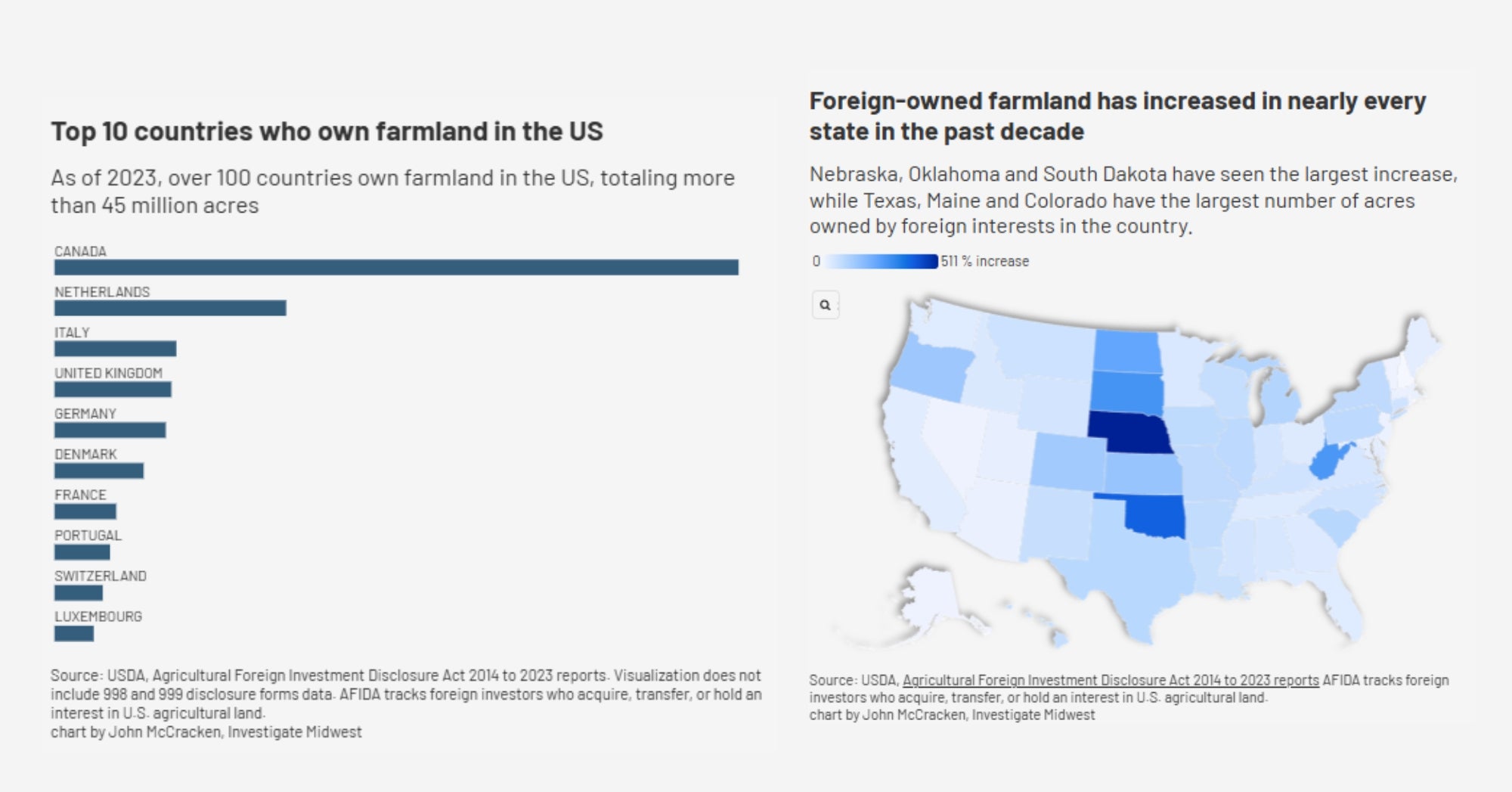
Foreign entities own roughly 46 million acres of U.S. farmland—and Chinese ownership accounts for less than 1% of that total .
In Oklahoma specifically, most foreign-held land is tied to Canadian and European investment, largely in renewable energy projects .
So why is the conversation accelerating?
Because this isn’t just about land.
It’s about perception.
When Perception Becomes Pressure
The pork industry operates within systems—production systems, supply chains, labor systems, regulatory frameworks.
But increasingly, it also operates within public perception systems.
And those systems don’t always align with data.
The growing focus on foreign ownership is less about acreage and more about:
- Control
- Transparency
- National security
- Trust
These are not production metrics.
But they are becoming operational realities.
Because perception drives policy—and policy shapes the environment producers operate in.
The Pork Industry Sits at the Center of It
This is where the conversation becomes relevant.
Smithfield Foods—the largest pork processor in the United States—is often pulled into the discussion due to its ownership structure.
Not because of new activity.
But because it represents something bigger:
The globalization of protein production.
And that’s where the tension sits.
The pork industry has spent decades optimizing for:
- Efficiency
- Scale
- Integration
- Global competitiveness
Those systems have delivered.
But they’ve also created complexity—especially when viewed through a political or public lens.
This Is Not About Today—It’s About Direction
There is no immediate operational shift happening on most farms because of this issue.
But that’s not the point.
The direction matters.
Because once an issue becomes political, it doesn’t stay static.
It evolves.
And that evolution can influence:
- Land access and ownership rules
- Expansion approvals
- Investment structures
- Cross-border partnerships
Even if the current data doesn’t justify the level of concern, the trajectory of attention does.
The Real Risk: The Gap Between System and Story
The pork industry doesn’t have a foreign ownership problem.
But it may have a communication problem.
A gap between:
- What the system actually is
- And how the system is being perceived
That gap is where pressure builds.
And it’s where industries either respond—or get shaped by forces outside their control.
What Comes Next
This is a moment for awareness—not reaction.
Because the issue isn’t going away.
It’s expanding.
And like many of the challenges facing pork production today, it sits outside traditional production metrics.
Labor.
Public trust.
Regulation.
And now—ownership narratives.
None of them start in the barn.
But all of them end up affecting it.
The Bottom Line
Foreign ownership isn’t the story.
But it’s becoming a signal of something bigger:
The pork industry is no longer being shaped solely by performance inside the system—but by how that system is understood from the outside.
And that shift changes everything.