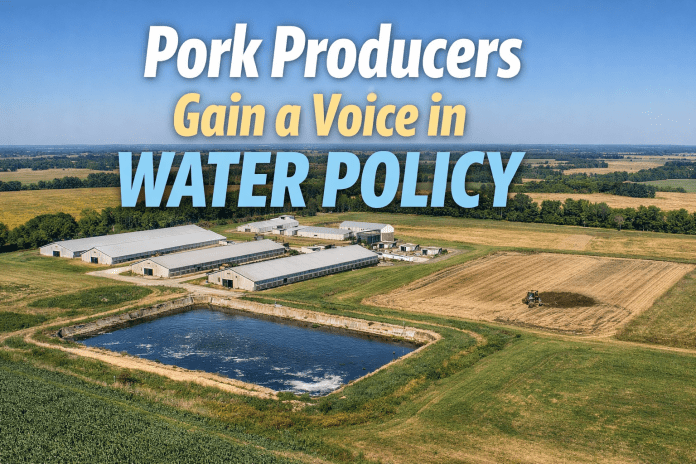
Pork producers have secured a stronger seat at the table in a high-profile environmental case that could shape how water regulations impact livestock operations across the U.S.
A federal appeals court has ruled that the National Pork Producers Council (NPPC), along with the Ohio Pork Council and other agricultural groups, can intervene as full parties in an ongoing legal challenge tied to water quality regulations in Ohio.
The case centers on the state’s nutrient management plan for the Maumee River Watershed and the Lake Erie basin—an area that has faced increasing scrutiny due to phosphorus runoff and its role in harmful algal blooms.
A Seat at the Table
The ruling from the U.S. Court of Appeals for the Sixth Circuit overturns a prior decision that denied agricultural groups the ability to formally participate in the case.
This decision is significant for pork producers and the broader livestock industry, as it allows them to directly represent their interests in discussions that could influence how manure and nutrient applications are regulated moving forward.
Industry groups have argued that their perspective is essential, particularly given the practical and economic realities of on-farm nutrient management. The court agreed that these organizations bring unique arguments and insights that differ from those presented by federal regulators.
What’s at Stake
At the heart of the case is how the Clean Water Act is interpreted and applied to agricultural nutrient runoff.
Environmental organizations have challenged whether current regulations go far enough to protect water quality in the Lake Erie region, while agricultural groups emphasize the importance of balanced, science-based approaches that recognize both environmental goals and production realities.
For pork producers, the outcome could have direct implications on:
-
Manure management practices
-
Nutrient application limits
-
Compliance costs and operational flexibility
A Broader Industry Signal
Beyond Ohio, the decision signals a broader shift in how agricultural stakeholders may engage in regulatory and legal processes.
By granting intervention rights, the court has opened the door for producers and industry organizations to play a more active role in shaping policies that impact their operations—not just responding to them after the fact.
This development reinforces a growing theme across the industry: producers are not only managing environmental responsibilities but are increasingly becoming part of the policy conversation itself.
Looking Ahead
As the case moves forward, all eyes will be on how the competing priorities of environmental protection and agricultural productivity are balanced.
For pork producers, the ability to directly participate in this process represents an important step toward ensuring that future regulations reflect both scientific understanding and real-world application.