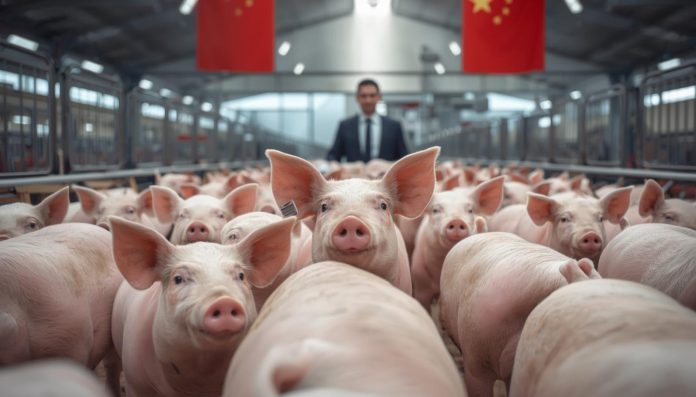
A leadership transition at one of China’s major agribusiness groups is drawing attention across the global pork sector.
Da Bei Nong (DBN) — a large Chinese agricultural company with operations spanning feed, animal health, breeding and integrated pork production — confirmed earlier this month that its founder and long-time chairman has passed away. An interim leadership structure is now in place while the company determines its longer-term governance plan.
While the announcement itself centers on corporate leadership, the broader implications extend well beyond a single company.
Why DBN Matters
DBN is part of a group of large-scale integrators that have reshaped China’s swine sector over the past decade. Following the devastating impact of African swine fever (ASF), China accelerated consolidation, biosecurity upgrades and vertical integration.
Today, large companies like DBN:
-
Operate across feed, genetics and finishing
-
Influence sow herd expansion or contraction decisions
-
Impact regional supply levels
-
Play a role in China’s pork pricing signals
Because China accounts for roughly half of global pork production, strategic decisions inside major Chinese integrators can ripple into global markets.
A Sector Still Adjusting
China’s swine industry has spent several years rebuilding and rationalizing its herd following ASF disruptions. More recently, pressure on margins and price volatility have encouraged producers to moderate expansion.
Market analysts have pointed to:
-
Ongoing adjustments in sow inventories
-
Periodic oversupply cycles
-
Continued biosecurity vigilance
-
Efforts to balance domestic production with import needs
In that context, leadership changes at major companies raise questions about future strategic direction:
-
Will production expand, stabilize or contract?
-
Will investment shift toward efficiency and cost control?
-
Will integration deepen across feed and genetics?
While no immediate operational changes have been announced, governance transitions can influence capital allocation and growth priorities over time.
What This Means for North America
For U.S. and Canadian pork producers, developments in China remain highly relevant.
1️⃣ Export Sensitivity
China’s domestic production levels directly affect import demand. If Chinese integrators increase output, global export opportunities may tighten. If production moderates, imports can rebound.
2️⃣ Price Signals
China’s production cycles influence global pork prices. Shifts in supply can impact futures markets, cutout values and overall price volatility.
3️⃣ Feed and Grain Dynamics
Large integrated operations influence feed demand patterns. Changes in expansion strategy affect soybean meal and corn demand globally — which matters to North American cropping systems tied to livestock feed.
Stability vs. Strategic Shift
It’s important to note that China’s largest agribusinesses are typically structured with management teams and established operational frameworks. A leadership change does not automatically signal disruption.
However, given the scale of companies like DBN, even incremental shifts in corporate strategy can have measurable effects across:
-
Production volumes
-
Capital investment
-
Biosecurity standards
-
International trade positioning
For the global pork sector, this is less about a headline and more about trajectory.
The Bigger Picture
The modern swine industry is globally interconnected. Decisions made in Beijing boardrooms can influence barns in Iowa, Ontario or Spain.
As China continues to balance domestic supply, margin pressures and disease risk, watching leadership stability at major integrators becomes part of understanding global pork fundamentals in 2026.
Swine Web will continue monitoring international developments that shape North American production and export dynamics.