By Swine Web
The pork industry doesn’t have a knowledge gap when it comes to meat quality.
It has an execution gap.
For decades, producers, genetic companies, and processors have understood the fundamentals:
- pH matters
- marbling matters
- stress impacts quality
- handling and chilling influence the final product
None of this is new.
And yet—inconsistent eating quality still shows up at the plate.
That’s not a science issue.
That’s a system issue.
An Industry Built for Efficiency—Not Experience
Modern pork production has been engineered for performance:
- faster growth
- improved feed efficiency
- higher lean yield
- consistent throughput
Those gains have been significant—and necessary.
But they’ve also come with trade-offs.
Selection for leaner carcasses has, in some cases, reduced:
- intramuscular fat
- flavor intensity
- margin for variability
At the same time, systems designed for scale have increased sensitivity to:
- transport stress
- handling inconsistencies
- variation at processing
The result?
A system that is highly efficient—
but not always forgiving when it comes to eating quality.
Where Quality Actually Breaks Down
Meat quality is often discussed upstream—at the genetic or production level.
But the reality is more complex.
Quality is built—or lost—across multiple points:
1. Genetic Potential (What Could Be)
Traits like marbling, muscle fiber structure, and growth curves set the ceiling for quality.
There is renewed attention on Duroc-influenced lines for their association with:
- improved tenderness
- better water-holding capacity
- more consistent eating experience
But potential is not outcome.
2. On-Farm Management (What Is Managed)
Nutrition, health status, and barn environment influence:
- muscle development
- stress resilience
- variability within groups
Even strong genetics cannot overcome inconsistent management.
3. Transport & Handling (Where Risk Increases)
This remains one of the most underestimated points in the system.
Stress prior to harvest directly impacts:
- glycogen depletion
- rate of pH decline
- likelihood of PSE pork
At scale, even small inconsistencies here can create significant downstream variation.
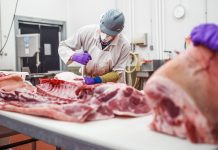
4. Processing (Where Outcome Is Finalized)
This is the most controlled point in the system—
and often the least scrutinized in quality conversations.
The packer is the final control point before the consumer.
Decisions made here determine whether quality is:
- preserved
- reduced
- or lost entirely
Key variables include:
- stunning practices
- time to exsanguination
- chilling rate and uniformity
- carcass handling and fabrication
At this stage, there is no recovery.
If quality is lost here, it shows up on the plate.
A Case of Alignment vs. Scale

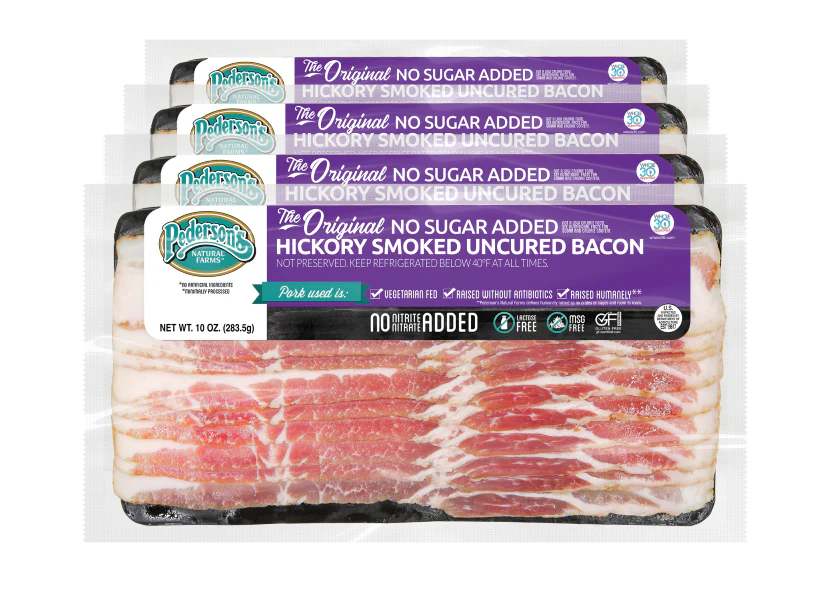
Companies like Pederson’s Natural Farms highlight what happens when the system is tightly aligned—where genetics, production, and processing are working toward a defined quality outcome, not just throughput.
Their model connects:
- defined genetic inputs (including Duroc influence)
- controlled production systems
- targeted processing
- clear product positioning
That level of alignment reduces variability.
Not because the biology is fundamentally different—but because fewer variables are left unmanaged.
This is more difficult to achieve at scale.
But it reinforces a critical point:
Consistency in meat quality is not just about better inputs—it’s about tighter control across the chain.
The Industry Challenge: Managing Variation at Scale
Large-scale pork production will continue to dominate the market.
And it should.
But scale introduces variability.
Which means the challenge is not just producing pork efficiently—but:
- managing biological variation
- controlling stress points
- aligning processing precision
- and creating feedback loops across the system
This is where the opportunity lies.
Not in choosing between efficiency and quality—
but in integrating them more effectively.
What Needs to Change
Improving meat quality consistency requires a shift in how the industry operates:
1. From Isolated Decisions → Integrated Systems
Genetics, production, and processing cannot operate independently.
2. From Output Metrics → Outcome Metrics
Yield and gain matter—but so does:
- tenderness
- juiciness
- repeat eating experience
3. From Assumption → Measurement
More real-time feedback from packer to producer:
- carcass data
- pH monitoring
- quality grading systems
4. From Volume Thinking → Variability Management
At scale, consistency is not automatic—it must be engineered.
Where This Is Heading
The pork industry does not lack the knowledge to deliver high-quality product.
It has:
- the genetics
- the nutrition
- the processing capability
The challenge is alignment.
Because meat quality is not created at one point in the system.
It is the result of everything that happens before it.
And increasingly, the market is paying closer attention to that result.
Final Thought
The pork industry has already solved for efficiency.
The next challenge isn’t producing more pork.
It’s producing pork that delivers the same eating experience—every time.
And that’s not a genetics problem.
It’s a system discipline problem.