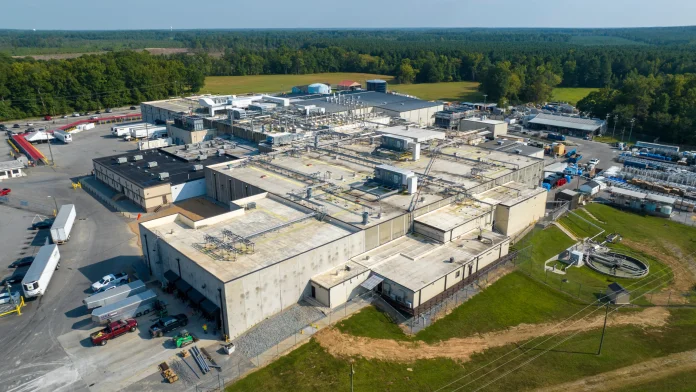
Boar’s Head has resumed limited operations at its Jarratt, Virginia, deli meat facility nearly 17 months after it was shut down following a 2024 listeria outbreak that killed 10 people and sickened dozens, according to company officials.
The reopening comes after a full reconstruction of the plant and extensive testing, but also amid renewed concerns about sanitation issues at another Boar’s Head facility in the state—raising broader questions about food safety culture, regulatory oversight, and trust across the protein supply chain.
A Facility “Rebuilt From the Inside Out”
Boar’s Head officials say the Jarratt site has undergone a comprehensive overhaul. Floors, drains, and air filtration systems were replaced, and production areas for raw and ready-to-eat foods were physically separated. The company reports conducting nearly 12,000 environmental swabs to confirm the absence of listeria before resuming operations.
The company also permanently discontinued liverwurst production and recalled more than 7 million pounds of deli meat following the outbreak.
Federal inspectors from the U.S. Department of Agriculture are currently stationed at the facility, a requirement for operations to proceed.
In addition, Boar’s Head says it has voluntarily adopted a higher USDA listeria-control standard, including a mandatory lethality or “kill step” for most finished products—an extra layer of protection aimed at preventing pathogen growth in ready-to-eat meats.
New Inspection Reports Raise Fresh Questions
While the Jarratt plant reopens, inspection records from a separate Boar’s Head facility in Petersburg, Virginia, have drawn renewed scrutiny. Documents obtained through a federal Freedom of Information Act request detail dozens of noncompliance reports between July and December 2025, citing sanitation lapses such as condensation dripping onto surfaces, meat residue on equipment and drains, and failures to follow internal listeria monitoring protocols.
Food safety advocates say the findings complicate efforts to rebuild consumer trust.
Brian Ronholm, director of food policy at Consumer Reports, noted that ongoing sanitation issues—even at a different facility—can signal deeper organizational challenges. “Inspection reports that highlight repeated problems point to a broader food safety culture issue,” he said.
Accountability and Industry Implications
U.S. Rep. Rosa DeLauro, a longtime advocate for stricter food safety oversight, said Boar’s Head must be held accountable for what she described as a “repeated pattern of jeopardizing food safety through unsanitary conditions.” Company officials have so far declined to testify in person before the Congressional Food Safety Caucus, responding instead in writing.
Boar’s Head also faces multiple lawsuits related to the outbreak. Several affected families and survivors have declined public comment due to nondisclosure agreements tied to financial settlements.
What This Means for the Protein Industry
For pork, beef, and poultry processors alike, the Boar’s Head situation underscores a critical reality: food safety failures are rarely confined to a single product or plant. Regulators, customers, and consumers increasingly evaluate companies based on system-wide culture—not isolated corrective actions.
As processors invest in automation, sanitation technology, and verification programs, the industry takeaway is clear: rebuilding trust requires more than infrastructure upgrades. It demands consistency, transparency, and a demonstrable commitment to food safety across every facility.
Boar’s Head maintains it is moving aggressively toward reducing noncompliance to zero. Whether that effort translates into lasting confidence—among regulators, customers, and consumers—remains an open question.